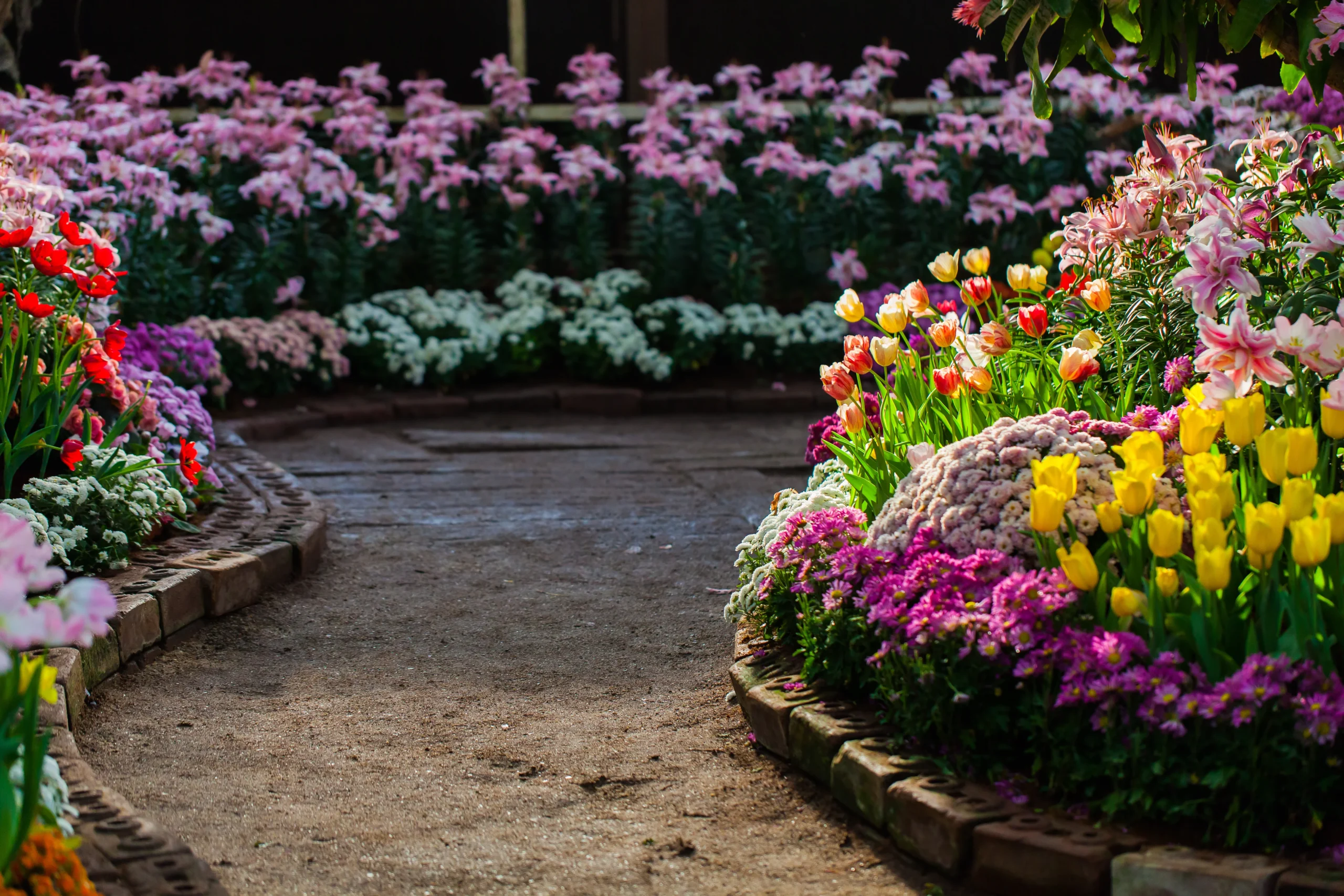
A garden without flower beds is a garden that’s still thinking about it. There is something about a proper flower bed – with defined edges, layered planting, and color that builds through the season – that elevates any outdoor space from a piece of land to a place someone genuinely loves. And yet flower beds are one of those things that a lot of people put off because they don’t quite know where to start. Shape first? Plants first? Edge first?
The answer, honestly, is shape first. The shape of a flower bed determines everything else about how it will look and feel within the wider garden. These ten flower bed ideas cover the full range – circular beds that become garden focal points, long borders that frame a walkway, curved beds that soften a lawn edge, and tight foundation beds that transform a house front. Whatever your space, whatever your soil, there is a flower bed idea in here worth digging for.
Our Favorite Flower Bed Ideas
1. A Circular Flower Bed with Gladiolus in Full Mixed Color
A circular flower bed filled with tall gladiolus flowers in red, yellow, pink, and white, surrounded by green grass with hedges, trees, and a cloudy sky in the background.
A circular flower bed set into a lawn is one of the most classic and most effective flower bed ideas going – and this one earns every bit of its drama. Tall gladiolus in red, yellow, pink, and white rising together from the center of a lawn circle creates a focal point that stops you mid-stride. The circle shape works particularly well with tall flowers because it lets the blooms be seen from every angle rather than just one direction. Gladiolus are summer bulbs that take very little effort once planted and give back an extraordinary amount of vertical color. If you have an open lawn and no focal point, this is where to start.
2. A Long Path Border with Gladiolus in Warm Tones
A long flower bed with gladiolus flowers in pink, white, yellow, and orange growing along a stone-edged garden path with green grass and trees in the background.
A long flower bed running alongside a garden path is one of those flower bed ideas that transforms the entire experience of moving through a garden. You are no longer just walking from one place to another – you are walking through something. The stone edging here is doing important work: it keeps the bed defined and the lawn separate, and it gives the whole border a finished quality that mulch alone can’t provide. Warm-toned gladiolus in pink, white, yellow, and orange are generous with color across most of summer, which is exactly what a border this prominent needs to justify its position.
3. A Narrow Wall Bed with Gladiolus and a Trellis Backdrop
Gladiolus flowers in red, pink, orange, white, and purple growing along a wall with a wooden lattice trellis, planted in a narrow garden bed beside a paved walkway.
Narrow beds alongside walls and fences are often the most overlooked flower bed idea in a garden – and this is a reminder of what they can become. A wooden trellis backing provides vertical structure and a backdrop that makes the flowers pop, while the narrow bed footprint means the planting stays contained and manageable. Gladiolus work brilliantly in this position because their upright growth habit suits the vertical emphasis of the trellis. The paved walkway on the other side frames the whole setup beautifully. A small space doing an enormous amount of visual work.
4. A Triangular Stone-Edged Bed Packed with Mixed Color
A triangular flower bed bordered with stones, filled with colorful flowers in purple, yellow, orange, red, pink, and blue, surrounded by green grass and garden plants in the background.
A triangular flower bed is one of those flower bed ideas that suits corner spaces beautifully – the shape fits naturally into angles where a circle or rectangle would leave awkward gaps. Stone border edging here gives the triangular bed real definition and makes the colorful planting within it look deliberately curated rather than randomly arranged. Purple, yellow, orange, red, pink, and blue all in one bed is ambitious color mixing, and it works because the stone border gives all that complexity a clean frame to sit within. The edging is doing as much design work as the flowers themselves.
5. A Foundation Flower Bed Along the Front of the House
A flower bed with purple, yellow, pink, and orange flowers planted along the front of a house with green siding, white trim, and a small porch with columns.
A foundation flower bed running along the front of a house is one of the most impactful flower bed ideas available from a curb appeal perspective. It bridges the gap between the house and the ground, softens the hard line where the building meets the earth, and adds color at exactly the height where most people’s eyes naturally fall. The mix of purple, yellow, pink, and orange here works against the green siding in a way that feels both complementary and vibrant. If your house front looks a little bare or flat, a well-planted foundation bed is the most straightforward fix there is.
6. A Curved Lawn Bed with Full Mixed Color Planting
A curved flower bed with purple, pink, white, yellow, and orange flowers growing beside a green lawn with trees and plants in the background.
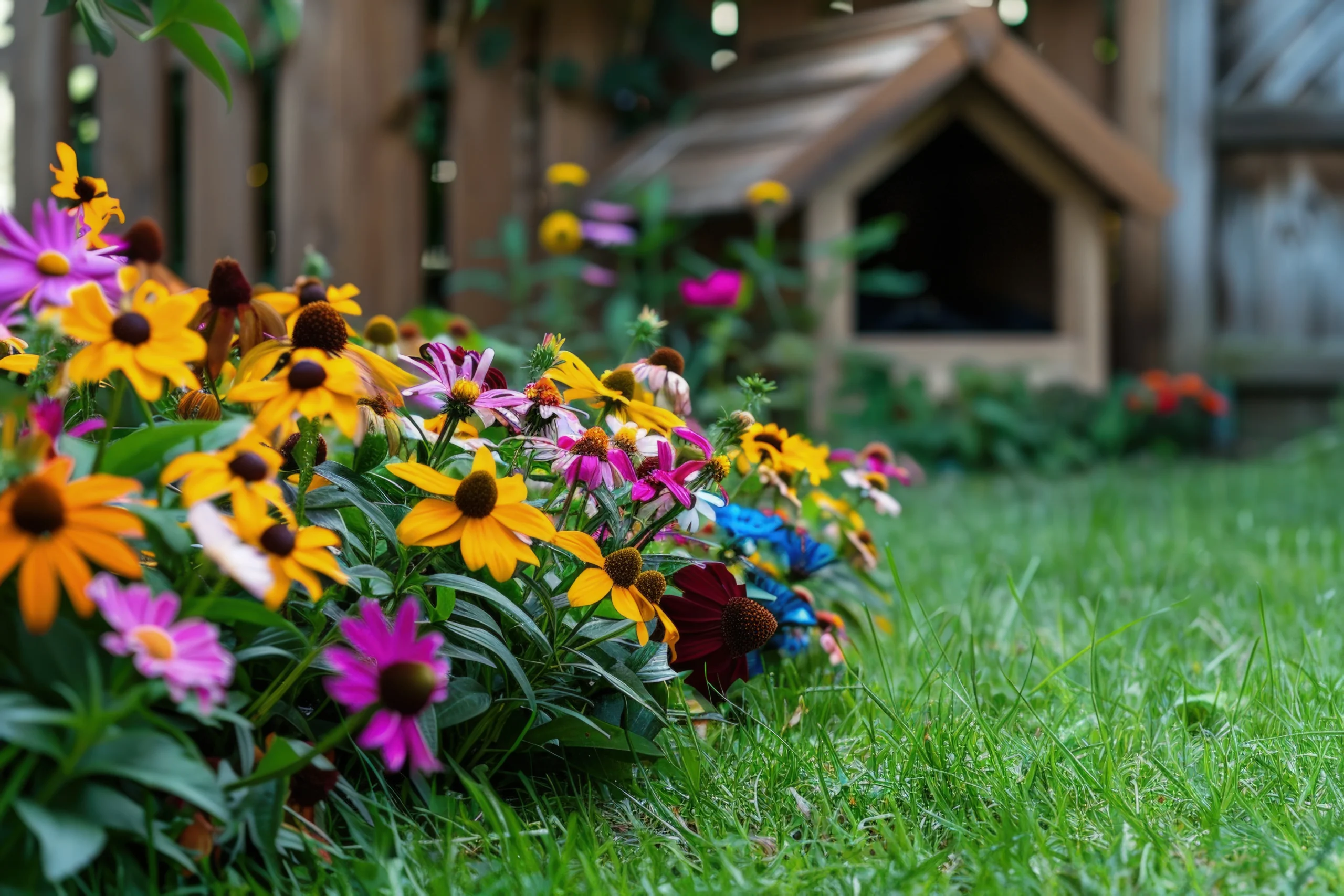
A curved flower bed against a green lawn is a flower bed idea that uses shape as the primary design move. The curve softens the garden in a way that straight-edged beds simply cannot – it creates a sense of flow and movement that makes the garden feel less like a divided space and more like a whole composition. The full mix of purple, pink, white, yellow, and orange here creates an abundance that feels genuinely generous. This is a flower bed that rewards you from inside the house as well as outside in it.
7. A Circular Layered Bed with Tall Evergreens as a Backdrop
A circular flower bed with purple, pink, yellow, and orange flowers arranged in layers, surrounded by green grass with tall evergreen trees in the background.
Layered planting within a circular flower bed – shorter plants at the edge graduating to taller ones at the center – is the flower bed idea that makes a garden look genuinely designed rather than planted. The layering creates depth and visual interest at every distance: close up you see individual flower detail, from further away the whole circle reads as a graduated mound of color. The tall evergreens behind provide a dark, consistent backdrop that makes every color in the bed pop. Backdrop matters more in flower bed design than most people realize, and this one has it absolutely right.
8. A Curved Walkway Bed Leading to a Red Front Door
A curved flower bed with purple, white, orange, and pink flowers planted along a paved walkway leading to a house with steps, a red door, and potted plants by the entrance.
A curved flower bed alongside a front walkway, leading toward a red door with potted plants framing the entrance – this is the flower bed idea that tells the complete story of a well-loved home before anyone has even knocked. The curve of the bed makes the approach to the door feel like a small journey through the garden. The color palette of purple, white, orange, and pink is warm and welcoming without being chaotic. And the red door at the end ties the whole composition together with a confident punctuation mark. First impressions do not come much better than this.
9. A Long Mixed Border with Ornamental Grasses and a Gravel Path
A long flower bed with orange, yellow, and purple flowers and tall ornamental grasses planted along a gravel path with green hedges and trees in the background.
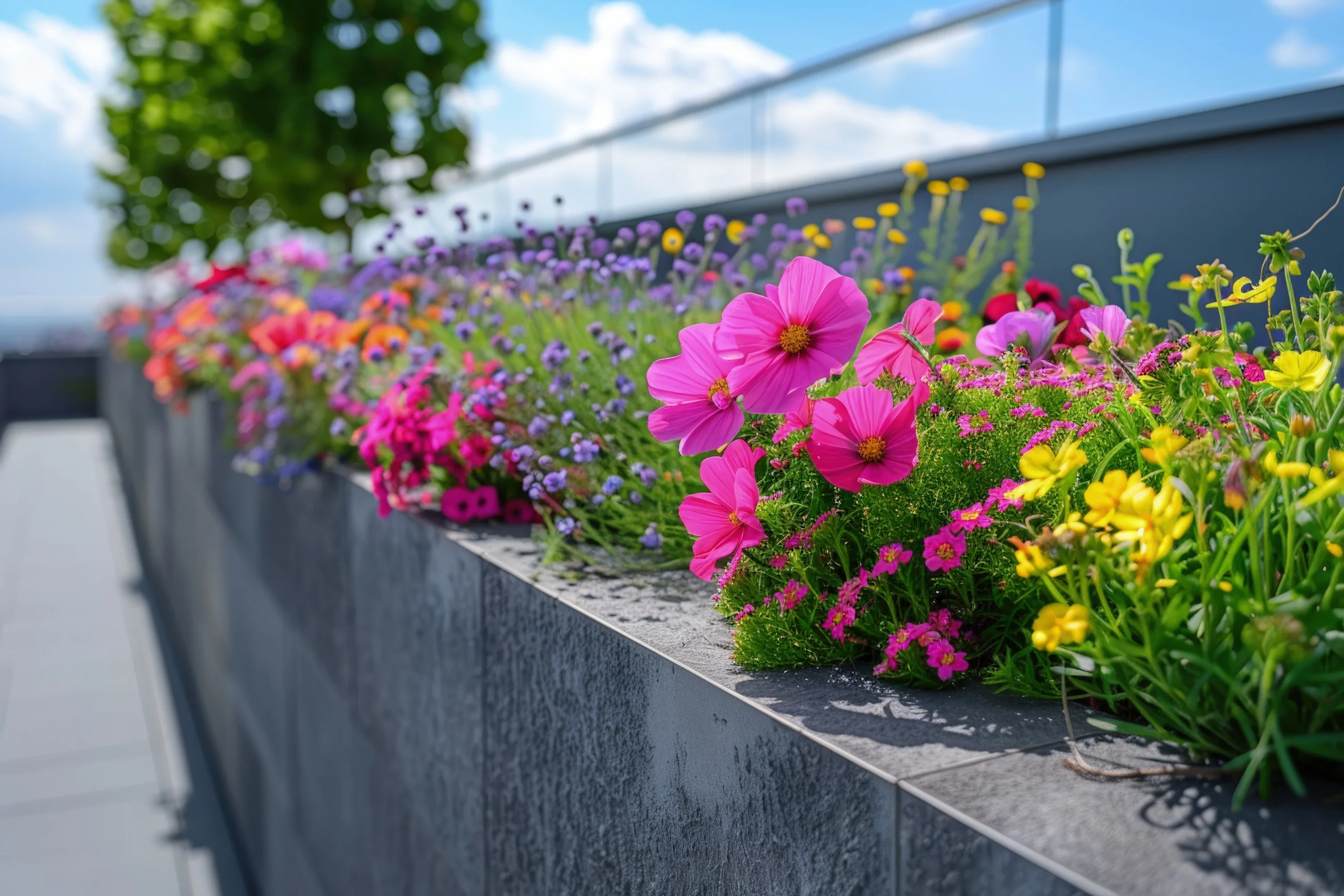
Mixing ornamental grasses with flowering plants in a long border is a flower bed idea that gives the planting two completely different qualities at once: the movement and texture of the grasses, and the color and form of the flowers. The grasses here add height and a feathery, naturalistic quality that makes the orange, yellow, and purple flowers alongside them look both structured and loose at the same time. The gravel path is a natural companion for this kind of planting – it suggests a garden that values texture and material as much as color. A border with real sophistication.
10. Rows of Purple, Pink, and White Beside a Grassy Path
A long flower bed with purple, pink, and white flowers planted in rows beside a grassy area, with a brick bridge and garden path in the background.
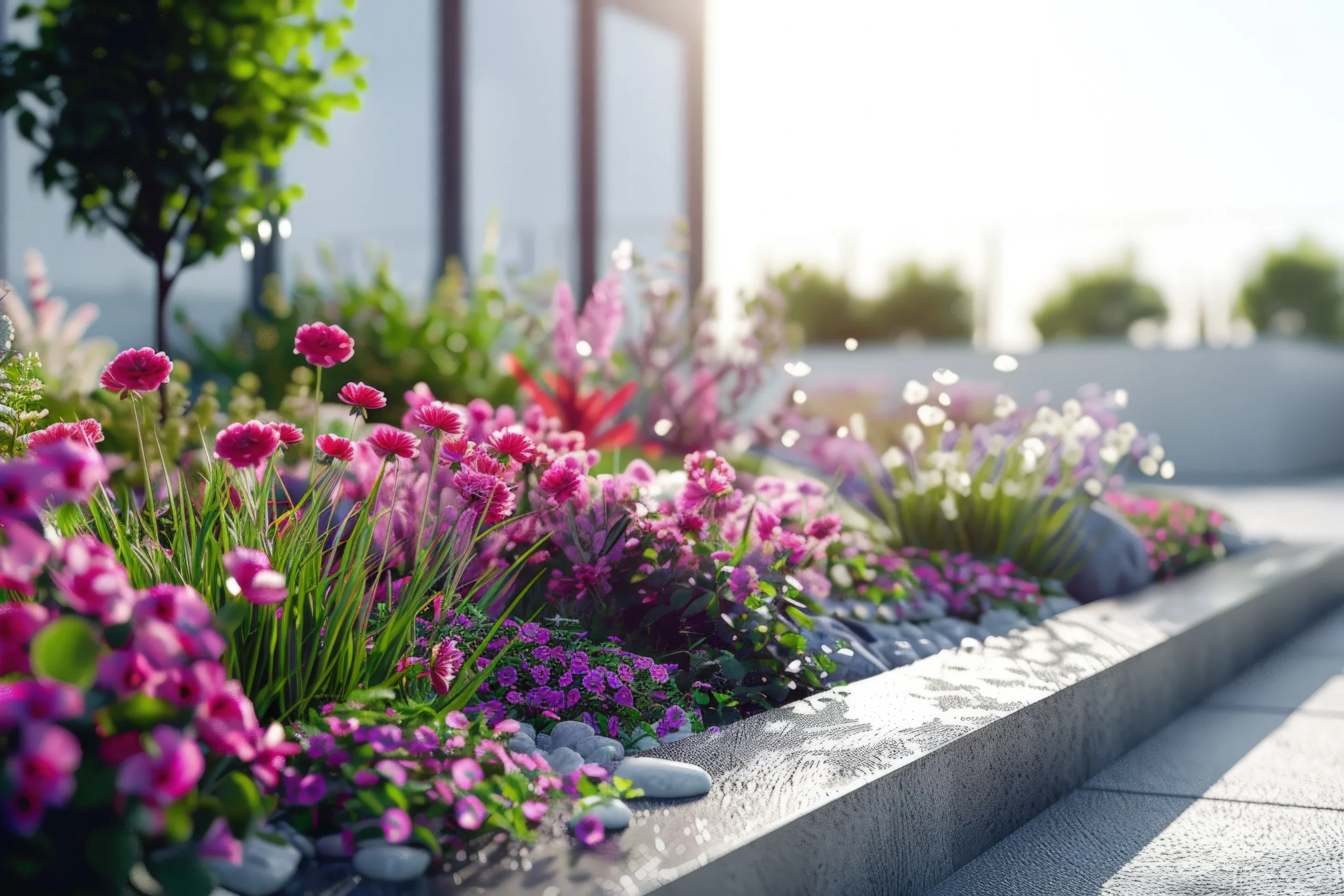
Planting in rows within a long flower bed is a flower bed idea that creates a very different effect from the mixed, naturalistic approaches in this list – it is more formal, more rhythmic, and has a quietly impressive quality that comes from repetition and order. Purple, pink, and white in rows beside a green grassy area creates a color scheme that feels simultaneously fresh and classic. The brick bridge in the background gives the whole garden a sense of scale and history that makes this flower bed feel like it belongs to something larger. Sometimes the tidiest flower bed idea is also the most striking one.
My Best Tips for Flower Bed Ideas
A flower bed that looks genuinely designed – not just planted – comes down to a handful of decisions made in the right order. Here is how I approach flower bed planning from scratch.
- Choose the shape before choosing any plants
Shape is the most fundamental flower bed decision and the one most people skip:- Circular: works as a focal point in an open lawn; seen from all sides; suits tall centrepiece plants
- Long border: follows a fence, path, or house wall; seen from one direction; suits layered planting from back to front
- Curved: softens a lawn edge; creates flow and movement; suits naturalistic, mixed planting
- Triangular or geometric: fits corner spaces; gives a formal, structured feel
- Foundation bed: runs along a house front or wall; bridges building and ground; suits low to mid-height planting
Once the shape is fixed, every other decision becomes easier.
- Edge the bed before you plant anything
A defined edge is the single biggest visual upgrade you can give a flower bed:- Stone edging: natural, durable, works with almost any style
- Metal edging: sleek and modern, holds a clean line indefinitely
- Brick edging: traditional, formal, works well with period properties
- Cut lawn edge: the simplest option – a half-moon edging tool creates a clean separation between lawn and bed for no cost at all
A bed with a clean edge always looks more finished than one without, regardless of what is planted inside it.
- Use the 3-layer planting formula
This is what makes a flower bed look designed rather than random:- Back or centre layer (tall): gladiolus, delphiniums, ornamental grasses, tall rudbeckia – plants that provide height and backbone
- Middle layer (medium): salvia, achillea, geraniums, lavender – gives the bed its body and seasonal color
- Front or edge layer (low): low sedums, alyssum, lobelia, creeping thyme – softens the edge between bed and lawn or path
Plant in groups of three or five of the same variety rather than one of everything – repetition is what makes a planting scheme look cohesive.
- Plan for the whole season, not just one month
A flower bed that looks spectacular in June and bare in August is a planning problem, not a plant problem:- Spring: tulips, alliums, forget-me-nots, wallflowers
- Early summer: salvia, geraniums, early roses, catmint
- Midsummer: gladiolus, rudbeckia, achillea, lavender at its peak
- Late summer into autumn: sedums, asters, ornamental grasses coming into their own
Choose at least one plant from each season to keep the bed earning its space all year.
- Choose a color strategy and stick to it
The flower bed ideas that look most polished have a clear color approach:- Hot colors (red, orange, yellow): energetic and eye-catching; works best in full sun
- Cool colors (purple, blue, white, pink): calm and elegant; works beautifully in light shade
- Tonal palette: variations of one color family – very sophisticated; purple to mauve to white, for example
- Mixed abundance: all colors together – works when plant heights are carefully layered and the bed has strong edging to contain the complexity
- Mulch after planting – every time
Mulch is the step that separates a finished flower bed from one that looks half-done:- Suppresses weeds that would otherwise compete with your plants for water and nutrients
- Retains soil moisture, which means less watering in dry spells
- Makes the bed look complete and considered – bare soil between plants reads as unfinished
- Use bark mulch, composted wood chip, or gravel depending on the aesthetic of the bed
- Apply 5-7cm deep, keeping it away from the stems of plants
- Low-maintenance flower bed ideas that still look generous
For a bed that thrives without constant attention:- Choose perennials as the backbone – they come back each year without replanting
- Plant ground-cover plants at the front edge to suppress weeds naturally
- Add gladiolus, allium, and other bulbs for effortless seasonal drama – plant once, enjoy for years
- Keep ornamental grasses in the mix – they are virtually maintenance-free and look good for ten months of the year
Copy-paste flower bed template
- Shape chosen first based on garden position: circular, long border, curved, or foundation bed
- Edge defined before planting: stone, metal, brick, or clean-cut lawn edge
- Three-layer planting: tall back/centre layer, medium middle layer, low front/edge layer
- Plants grouped in threes or fives – repetition of varieties rather than one of everything
- Color strategy chosen: hot palette, cool palette, tonal, or mixed abundance
- Seasonal coverage planned: at least one plant from spring, early summer, midsummer, and late summer
- Mulch applied 5-7cm deep after planting to suppress weeds and retain moisture
Frequently Asked Questions
For a first flower bed, start with a simple shape – a long border along a fence or path is easier to plan and plant than a circular bed. Choose a small number of reliable plants rather than lots of different varieties: lavender, salvia, rudbeckia, and a few gladiolus bulbs give you color across the season without demanding specialist knowledge. Define the edge clearly before you plant anything, add a layer of mulch after planting, and water regularly through the first season while plants establish. A simple, well-edged bed with three or four plant varieties will always look better than a complicated one that was never quite finished.
Three things consistently make a flower bed look designed: a clean, defined edge, plants grouped in odd numbers of the same variety rather than one of everything, and a clear color strategy rather than random color mixing. The edge is the most important – a sharp line between the bed and the lawn or path immediately gives the whole planting a polished, intentional quality. After that, repeat the same plants in groups of three or five throughout the bed rather than using every space for a different species. Repetition is what designers use to create rhythm and coherence, and it works just as well in a home garden as anywhere else.
Long borders work best with a mix of heights and a reliable sequence of bloom times. For the back layer, gladiolus and delphiniums provide dramatic summer height. In the middle, salvia, achillea, and rudbeckia give reliable long-season color. At the front edge, lavender, low geraniums, and catmint soften the transition to lawn or path beautifully. Ornamental grasses mixed throughout add movement and texture that purely flowering plants cannot replicate. The key principle for a long border is repetition: plant in drifts rather than spotting individual plants, and repeat the same combination at intervals along the length so the eye travels smoothly rather than jumping from point to point.