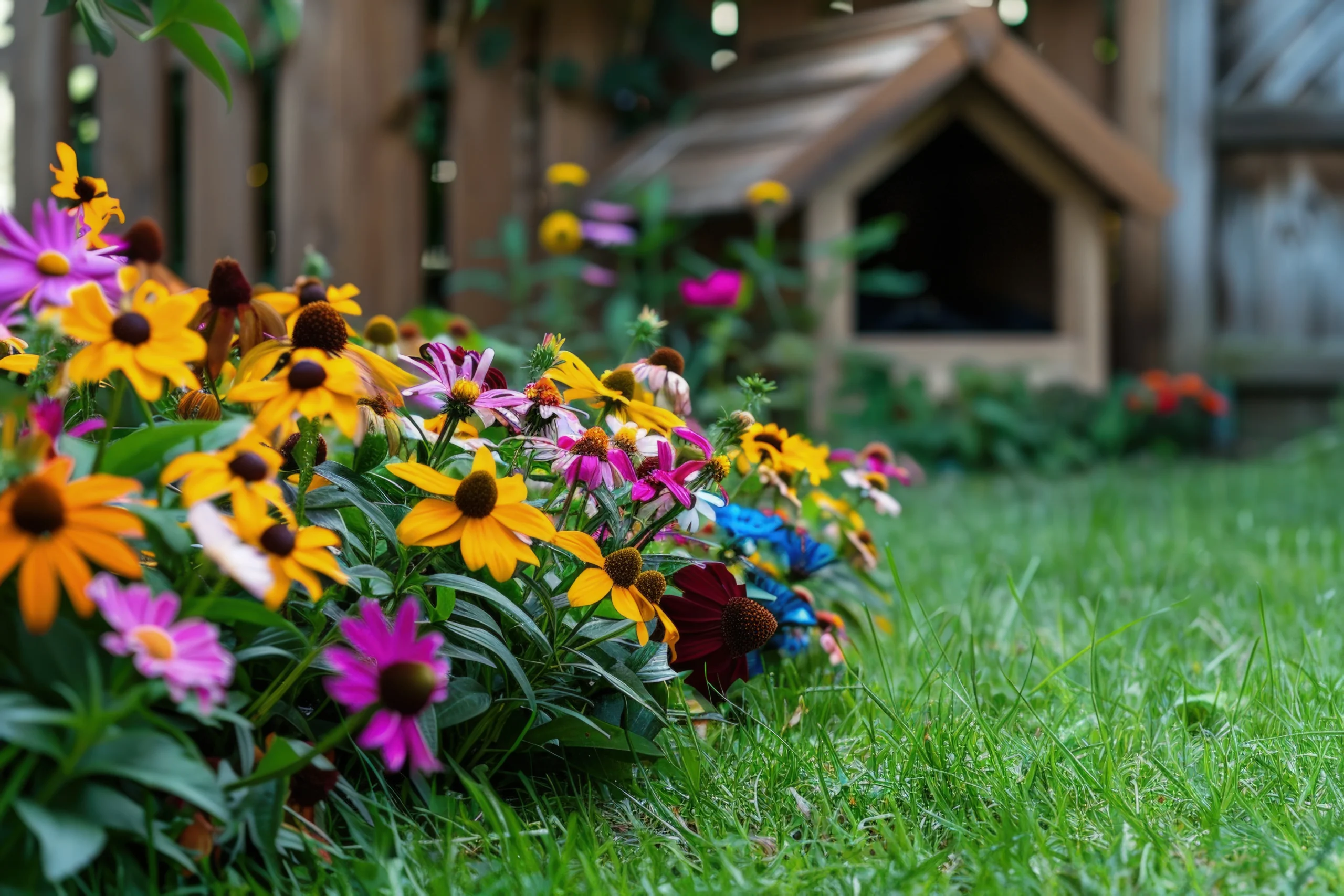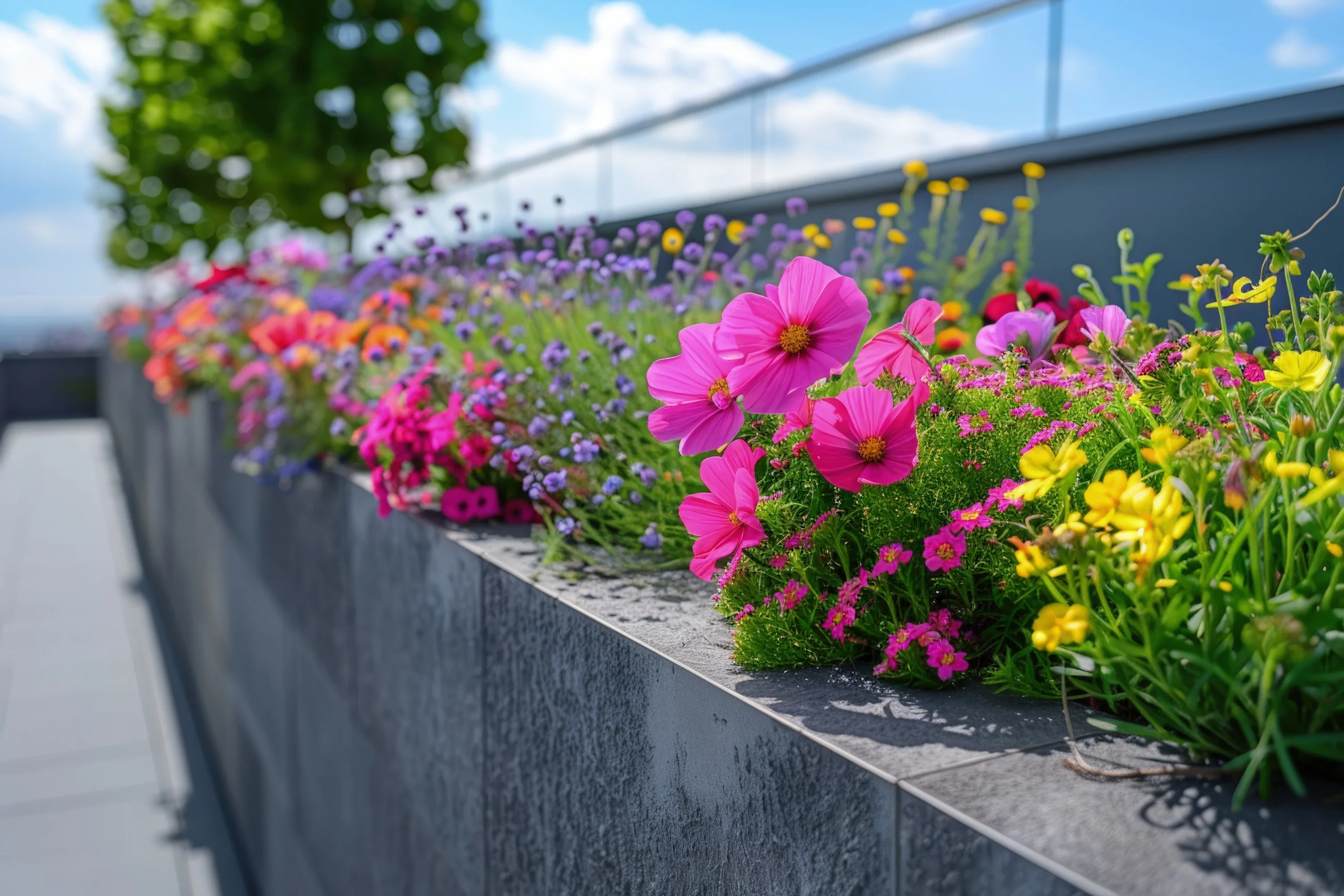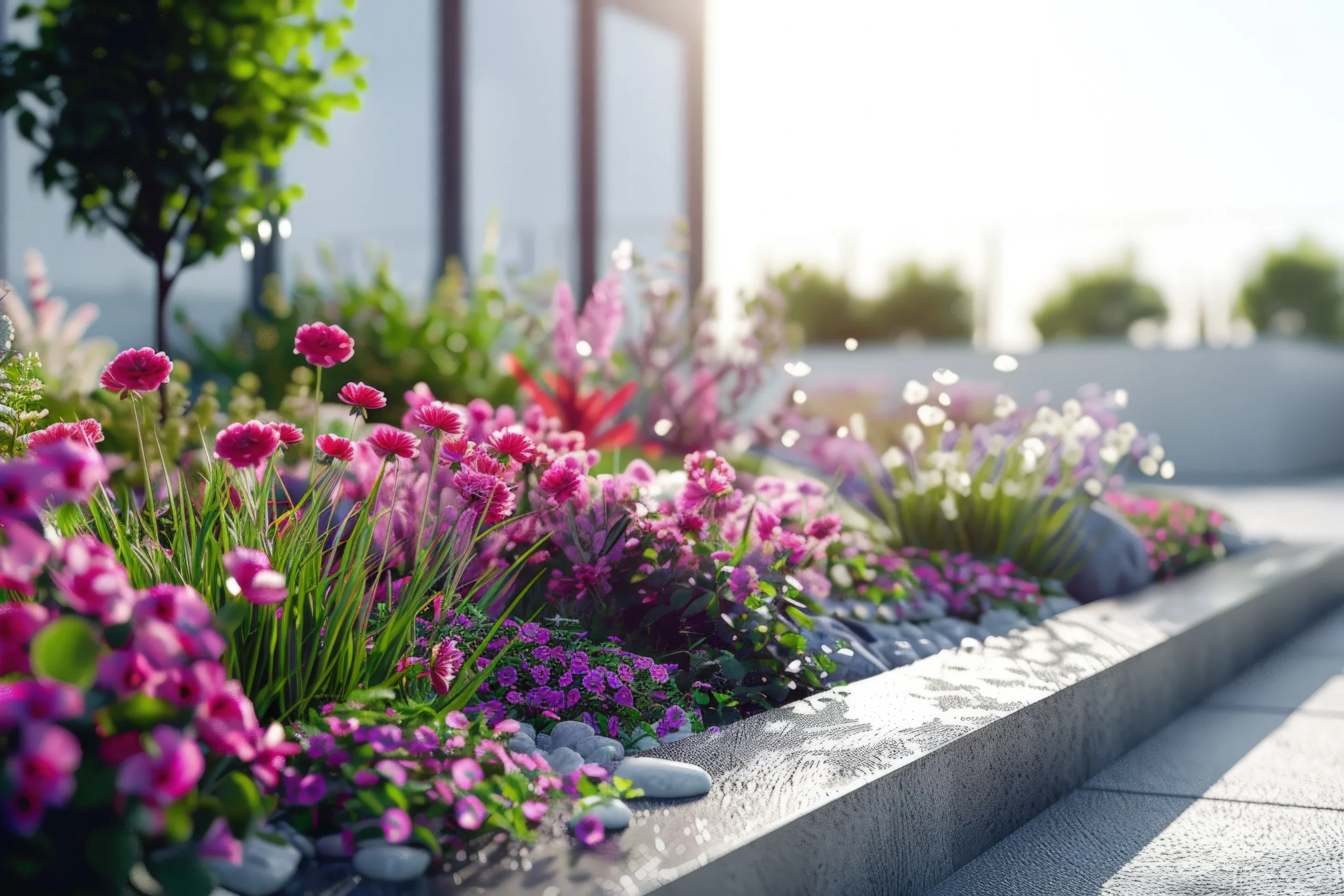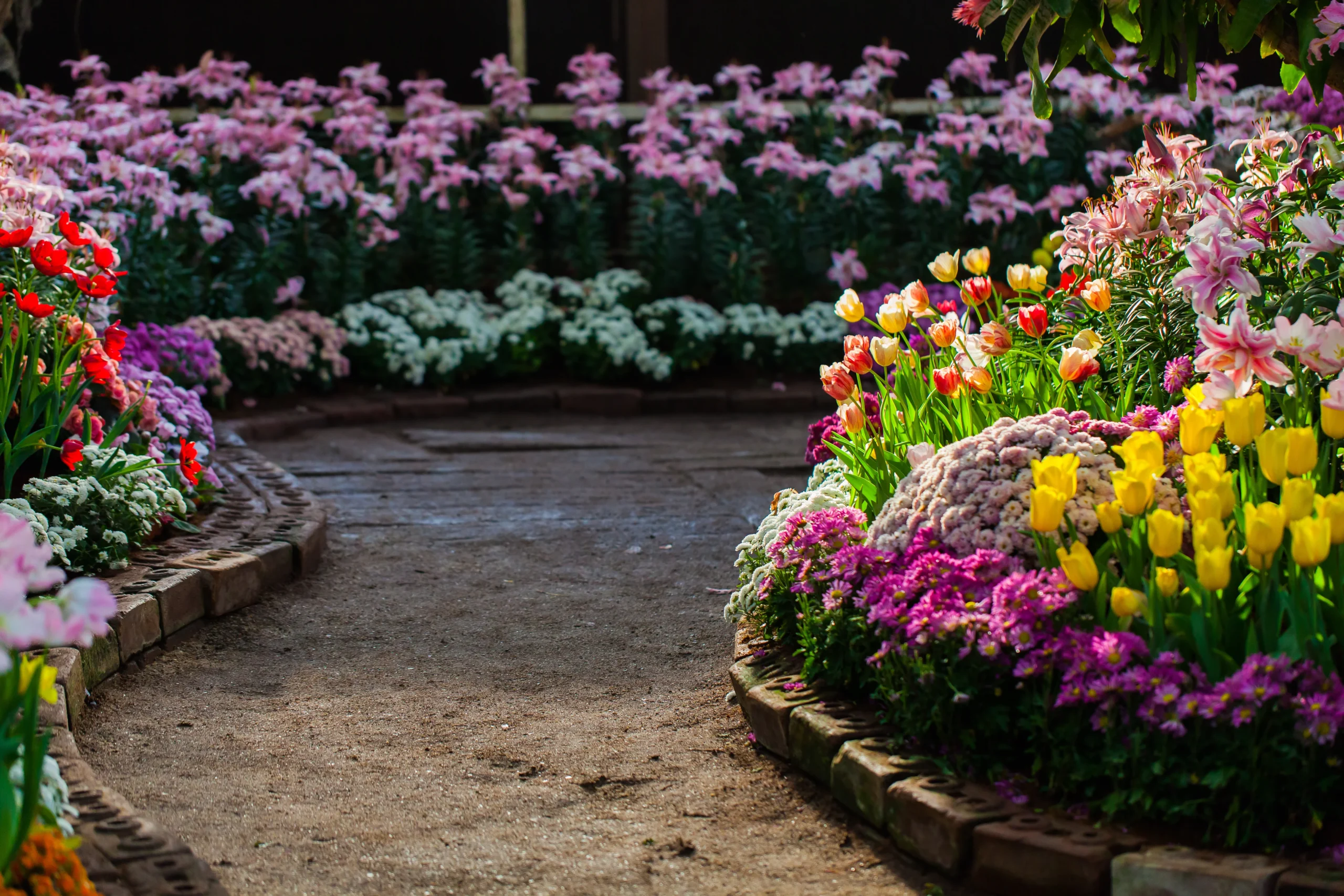
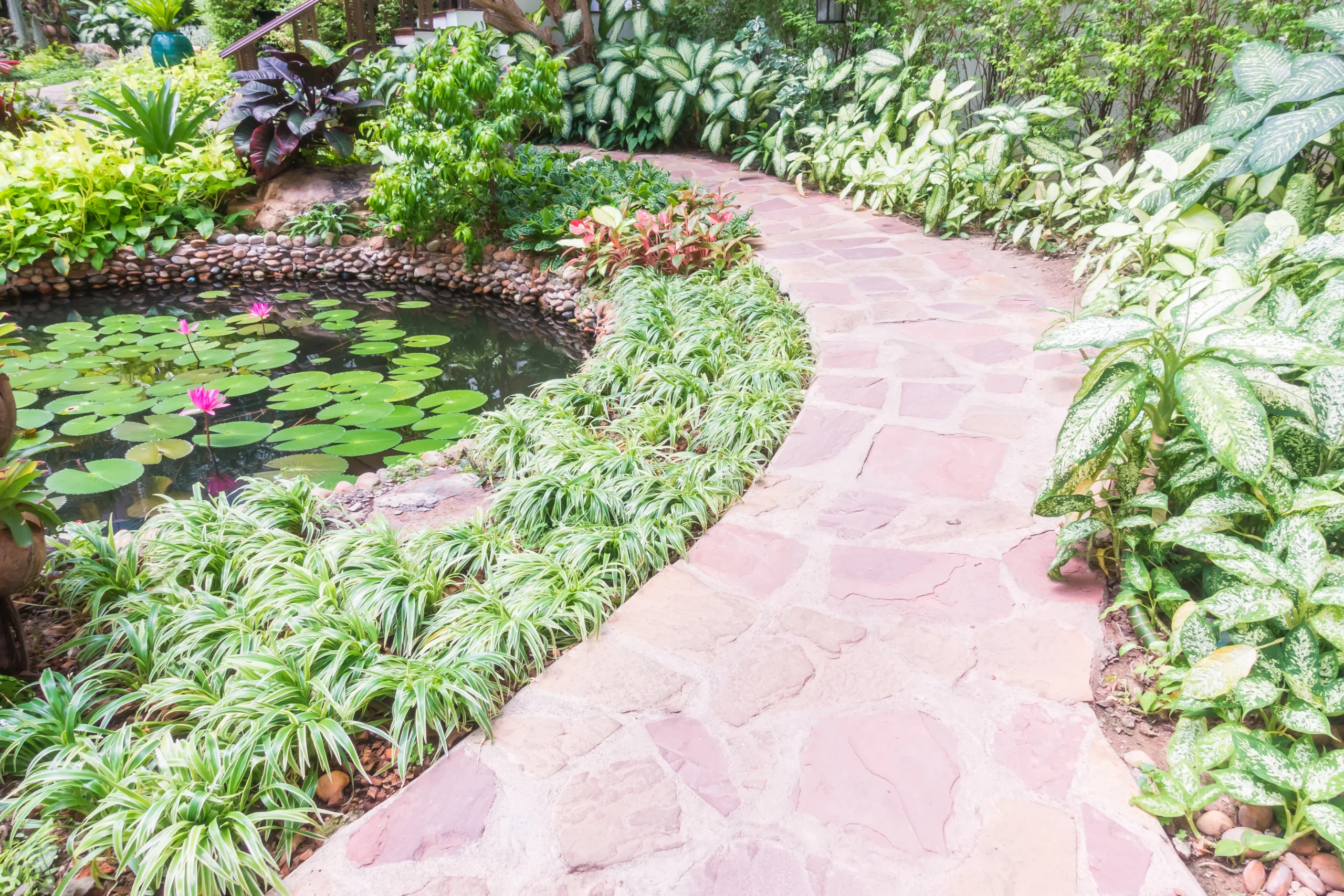
I have a theory about flower bed edging. It is that a well-edged flower bed with average plants will always look better than a stunning planting with no edge definition at all. The edge is what tells your eye where the garden ends and the lawn begins. It is what gives a bed intention – what transforms a collection of plants into a composed garden feature. Without it, even the most beautiful planting can look a little uncertain, a little unfinished. With it, everything comes together.
The good news about flower bed edging ideas is that there are so many of them, and they suit so many different garden styles, budgets, and skill levels. Natural stone that has been sitting in a field for a hundred years. Dry creek beds of white pebbles that double as drainage. Simple stone blocks set in a curve along a fence line. These ten ideas cover the full range, and all of them are worth a close look.
Our Favorite Flower Bed Edging Ideas
1. A Stone Path Winding Through Lavender – the Edge as a Journey
A stone garden path winding through beds of purple lavender flowers surrounded by green grass and plants.
When the edging material is also the path, the flower bed edging idea becomes something more – a way of moving through the garden rather than just containing the planting. The stone here does double duty: it defines the lavender beds on either side and it guides you through them, so you experience the scent and the purple abundance from within rather than from a distance. Winding stone paths through planting create a sense of discovery that straight edges and straight paths simply cannot replicate. One of the most immersive flower bed edging ideas on this list.
2. A Clean Curved Edge Along a Driveway with Mixed Color Blooms
A curved flower bed with red, yellow, pink, and white flowers planted along a paved driveway beside a green lawn and a tree.
A cleanly edged curved bed running alongside a driveway is one of those flower bed edging ideas that does the most with the least. The edge itself – that sharp line between the planting and the pavement – is the primary design move. Everything planted within it benefits from that definition. Red, yellow, pink, and white together are bold enough to hold their own against the visual weight of a driveway, and the curve softens what might otherwise feel like a very hard, linear space. Functional and beautiful at the same time.
3. A Curved Driveway Bed with a Crisp Lawn Separation
A curved flower bed with red, yellow, pink, and white flowers planted along a paved driveway beside a green lawn and a tree.
What this flower bed edging idea demonstrates so well is the power of a clearly maintained edge between lawn and bed. The contrast between the clipped green lawn and the flowering bed is only as sharp as the line between them – and that line is everything. Even without any physical edging material, a cut lawn edge that is maintained regularly creates a definition that transforms the appearance of the whole front yard. It is the most affordable flower bed edging idea available, requires only a half-moon edger and fifteen minutes, and the effect is immediate.
4. Stone Block Edging Along a Fence with Abundant Mixed Color
A curved flower bed bordered with stone blocks and filled with pink, yellow, orange, red, and white flowers, running along a wooden fence beside a green lawn and a stone path.
Stone blocks set in a curve along a wooden fence is one of the most practical and most attractive flower bed edging ideas available for a garden boundary. The blocks are easy to install, they hold a curve beautifully, and they create a clear physical barrier that keeps lawn grass out of the bed and mulch in it. The wooden fence provides the vertical backdrop and the stone blocks provide the horizontal definition – together they frame the abundant planting perfectly. A flower bed edging idea that requires very little skill to install and looks genuinely professional once it is done.
5. Small Stone Blocks Bordering a Colorful Fence-Line Bed
A curved flower bed with pink, orange, yellow, and purple flowers planted along a wooden fence, bordered with small stone blocks beside a green lawn.
Smaller stone blocks used as edging have a slightly more informal, cottage-garden quality than larger stones or formal metal edging – and for fence-line beds packed with mixed color flowers, that informality is entirely appropriate. The stones here are close enough together to read as a continuous border without being so large that they compete with the planting. It is a flower bed edging idea that is easy to adjust, easy to extend, and genuinely looks good from the day you put it in. Pink, orange, yellow, and purple against a wooden fence is a warm and generous color combination that suits this relaxed edging style perfectly.
6. A Cut Lawn Edge Curving Around a Mixed Bed Under a Tree
A curved flower bed with red, white, purple, and yellow flowers and green plants arranged along a lawn under a tree.
This is the flower bed edging idea that relies entirely on the precision of the cut edge rather than any additional material – and it makes the case convincingly. The clean line between lawn and bed, maintained consistently, gives the planting a crispness and definition that frames it beautifully against the green grass. Under a tree, where roots and shade create a natural planting area, a clean cut edge is often the best approach: it respects the organic quality of the setting while still giving the bed clear boundaries. Simple, effective, and genuinely satisfying to look at.
7. A Curved Foundation Bed Edging Along the House Front
A curved flower bed with pink, orange, white, and purple flowers and green plants arranged along the front of a house with windows and evergreen shrubs.
A curved front-of-house flower bed with a cleanly maintained edge between the planting and the lawn is one of the most impactful flower bed edging ideas for curb appeal. The curve here softens the straight line of the house facade and creates a planting area that feels designed rather than default. Pink, orange, white, and purple with evergreen shrubs as the structural backbone gives the bed something to do in every season – the flowers provide summer color, the evergreens hold the shape and the green through winter. The edge holds all of that together and makes it legible from the street.
8. A Rock Garden with a Dry Creek Bed – Edging as Landscape Feature
A rock garden with large stones and a dry creek bed of small pebbles, surrounded by purple and pink flowers and green plants beside a grassy lawn.
A dry creek bed of small pebbles bordered by large stones is one of those flower bed edging ideas that goes far beyond edging – it becomes a landscape feature in its own right. The creek bed defines the boundary of the planting area while also suggesting movement and natural water flow, which gives the garden a dynamic quality that static edging cannot. Purple and pink flowers alongside it look as if they chose to grow there, beside a natural watercourse, which is a very different effect from a planted bed beside a lawn. Functional, beautiful, and genuinely distinctive.
9. White Pebble Creek Bed with Stone Border and Purple Blooms
A stone border with purple and pink flowers growing along a dry creek bed filled with small white pebbles beside a green lawn.
White pebbles in a dry creek bed alongside a stone border and purple-pink planting is a flower bed edging idea that is simultaneously practical and beautiful. The white pebbles contrast sharply with the green lawn and the purple flowers, creating a strong visual line that you’d normally need formal edging to achieve. They also provide excellent drainage at the base of the planting, which the flowers genuinely benefit from. This is the flower bed edging idea for gardeners who want something that looks considered and slightly unexpected – natural materials used in a way that feels designed without being formal.
10. Large Stone Edging Around a Colorful Mixed Bed
A flower bed bordered with large stones, filled with small colorful flowers and green plants, set beside a grassy lawn with trees and shrubs in the background.
Large stones used as flower bed edging have a permanence and a weight that smaller blocks and metal edging simply cannot match. They look as though they have always been there – as though the garden grew around them rather than that someone placed them deliberately, which is the most natural and most satisfying quality any garden element can have. Against a grassy lawn with trees and shrubs in the background, a flower bed bordered with large stones feels rooted in the landscape in a way that manufactured edging materials never quite achieve. One of the most timeless flower bed edging ideas on this list.
Find more Flower Bed Edging Ideas on our Pinterest
My Best Tips for Flower Bed Edging Ideas
Edging is not the most glamorous part of garden design but it might be the most impactful one per hour of effort. Here is everything worth knowing before you choose your edging material and pick up a spade.
- Choose your edging material based on garden style first, practicality second
There is no universally “best” flower bed edging – the best one is the one that suits your garden:- Natural stone or large rocks: timeless, organic, works with cottage and naturalistic styles; heavy and permanent
- Stone blocks or pavers: clean and defined, suits most styles, easy to install in curves
- Metal edging (steel or cor-ten): sleek and modern, holds a razor-sharp line, long-lasting
- Brick: traditional and formal, great with period properties, permanent
- Timber or log rolls: informal and rustic, suits woodland or cottage gardens, needs replacing every few years
- Gravel or pebble border: naturalistic, good for drainage, suits Mediterranean and dry garden styles
- Cut lawn edge: no material required, looks brilliant when maintained, needs regular attention
- Plan the curve before you start installing anything
A poorly planned curve is worse than no curve at all. Before placing a single stone or pushing in a single edging strip:- Use a garden hose or rope to lay out the curve on the ground – step back and look at it from the street before you commit
- Photograph it from a distance – curves look very different close up versus from the viewing point that matters
- Make curves gradual and generous rather than tight and fussy – tight curves are hard to mow around and harder to maintain
- Mark the line with sand or spray paint once you are happy, then remove the hose and install the edging along the marked line
- Dig a proper edge trench – do not just place edging on the surface
This is the step that separates edging that stays in place from edging that shifts and disappoints:- Dig a trench along your marked line to the depth of the edging material plus a few centimetres
- Set the edging so the top sits just at or slightly above lawn level – high enough to see, low enough to mow over without catching
- Backfill and firm the soil on both sides to hold the edging in place
- For stone block and rock edging, set each piece firmly with no wobble before moving to the next
- Match the edging height to the planting intensity
The depth of the edging matters as much as the material:- Low edging (2-3cm above ground): suits neat, formal beds with defined plants – just enough to mark the line
- Medium edging (5-8cm): works for most garden beds, keeps mulch contained, visible from a distance
- Raised edging (10cm or more): suits beds where you want to prevent grass invasion aggressively, or where the bed is raised above lawn level
- Large stone or rock edging: suits naturalistic styles where the edging is a feature element rather than a subtle line
- Use dry creek beds for drainage and visual interest simultaneously
A dry creek bed as flower bed edging is one of those ideas that solves two problems at once:- In areas where water pools at the base of a planting, a pebble creek bed channels water away from plant roots
- White or pale pebbles create a strong visual contrast with lawn and planting that works as effective edging
- Large stones on either side of the creek bed contain the pebbles and complete the natural watercourse illusion
- Plant moisture-tolerant species along the creek edge (astilbe, iris, creeping jenny) for a naturalistic planted streamside look
- Maintain edges as regularly as you water
Even the best physical edging needs maintenance to keep looking sharp:- Cut the lawn edge with a half-moon edger or long-handled edging shears every two to four weeks in the growing season
- Clear any grass that creeps under stone or block edging before it establishes in the bed
- Reset any stones or blocks that shift over winter due to frost heave each spring
- Refresh the mulch layer inside the edging each spring – as it breaks down, the bed can look flat and the edging loses definition
- Low-maintenance flower bed edging ideas that hold up over time
For edging that keeps working without constant intervention:- Metal edging holds a line indefinitely and requires almost no maintenance – it never shifts, never rots, never needs replacing
- Large natural stone edging settles permanently and gets better looking as moss and lichen establish on it over time
- Concrete or brick edging is the most permanent option – it will outlast most other elements in the garden
- Avoid thin plastic edging strips – they look fine initially and deteriorate rapidly, cracking, fading, and popping out of the ground within a few seasons
Copy-paste flower bed edging template
- Edging material chosen to match garden style: stone, metal, brick, timber, gravel, or cut lawn edge
- Curve planned with a garden hose and viewed from the street before installation
- Edge trench dug to proper depth – edging set firmly, not placed on the surface
- Edging height appropriate to the bed: low for formal, raised for heavy planting or mulch retention
- Mulch applied inside the edged bed to complete the finished look
- Edge maintained every 2-4 weeks in growing season alongside regular planting care
Frequently Asked Questions
Metal edging – either powder-coated steel or weathering cor-ten steel – is the best low-maintenance flower bed edging idea available. Once installed correctly it holds its line indefinitely, requires no seasonal maintenance, never rots or fades, and keeps grass out of beds more effectively than most alternatives. Large natural stones are a close second for low maintenance: they are permanent, they improve with age as moss establishes, and they never need replacing. Both options cost more upfront than plastic or timber alternatives but pay back that investment many times over in longevity and the reduction in maintenance they require.
The key to a neat curved flower bed edge is planning the curve before cutting or installing anything. Lay a garden hose along the ground in the shape you want, step back and look at it from the main viewing point, adjust until it looks right, then mark the line with sand or spray paint before removing the hose. For a cut lawn edge, a half-moon edger gives the cleanest result – push it vertically into the soil along your marked line and remove the turf strip to create a clean separation. For physical edging materials, flexible metal or plastic strips follow curves most easily, while stone blocks and pavers need to be set at slight angles to each other to create the curve gradually.
Natural and cottage garden styles suit edging materials that feel organic and unforced. Large irregular stones or rocks placed loosely along the bed edge are perfect – they look as though they have always been there and they complement loose, naturalistic planting beautifully. A dry creek bed of pebbles and stones creates a natural watercourse effect that suits cottage and naturalistic gardens especially well. Timber log rolls or half-round timber edging have a rustic quality that works in woodland and cottage settings. A maintained cut lawn edge, kept sharp with a half-moon edger, works in almost any style and lets the planting be the feature without any competing material taking attention.